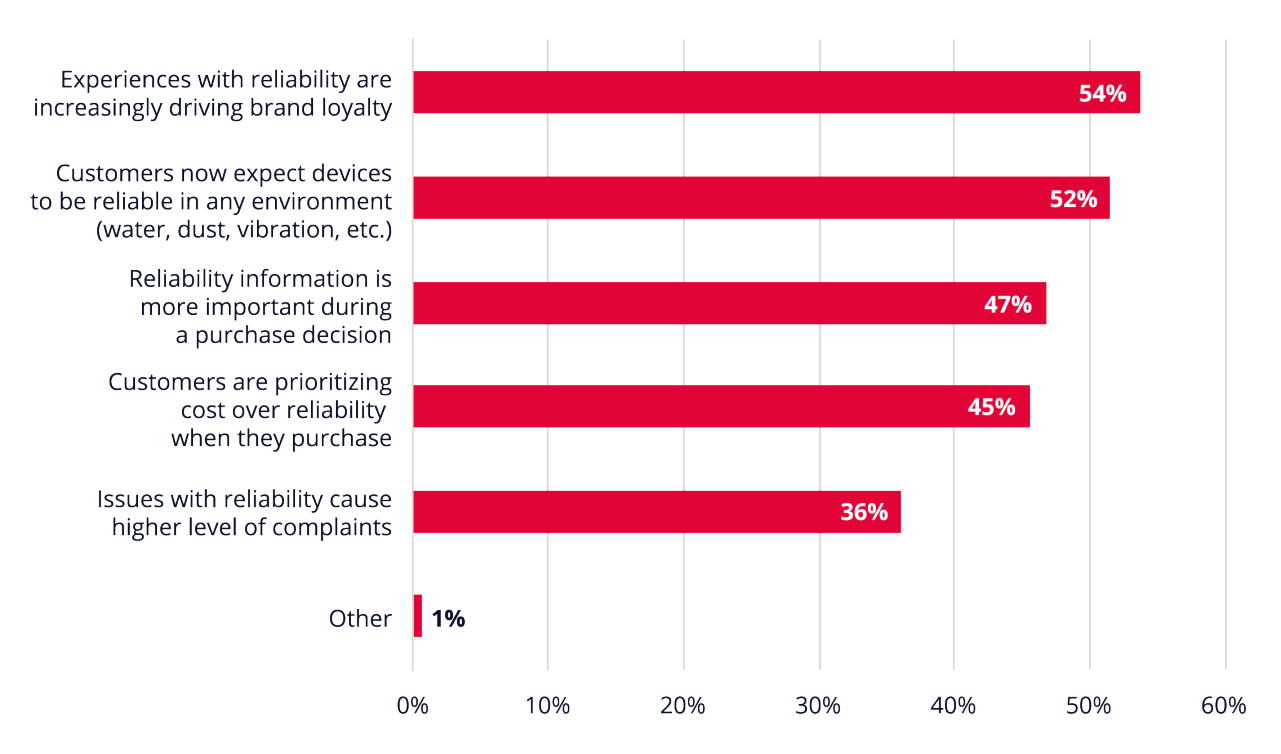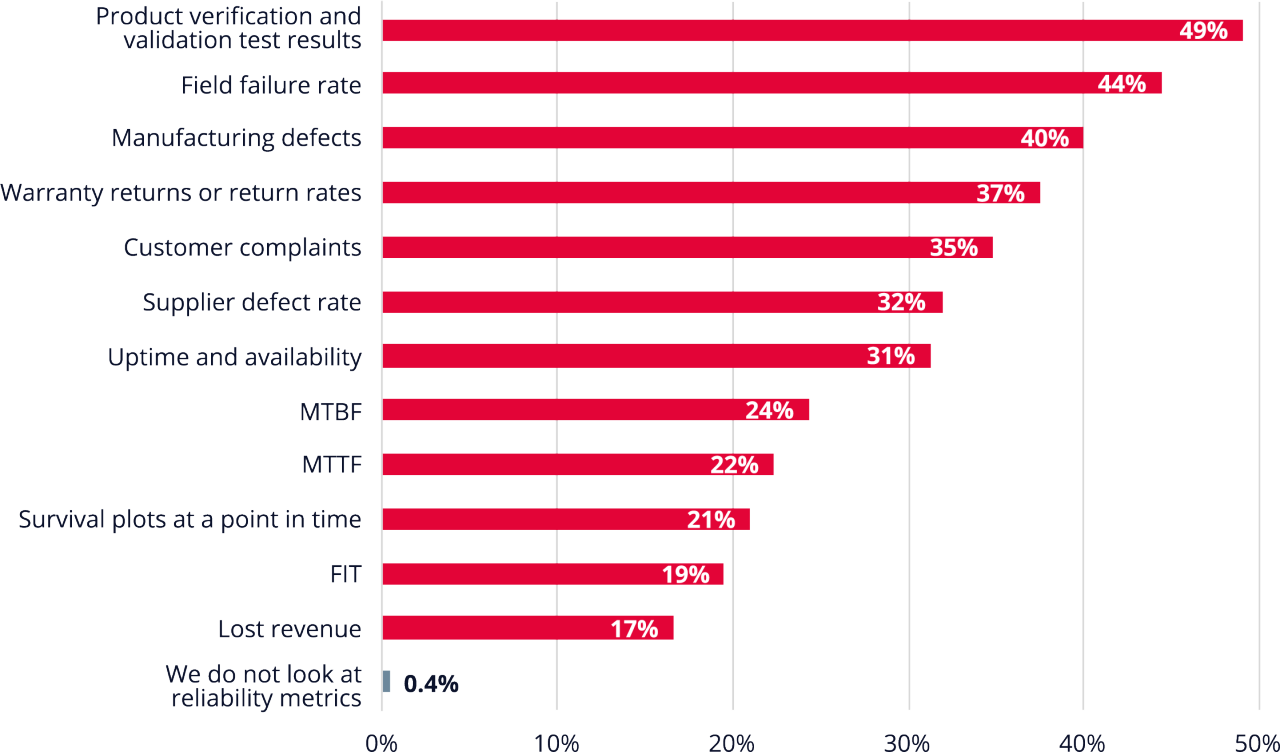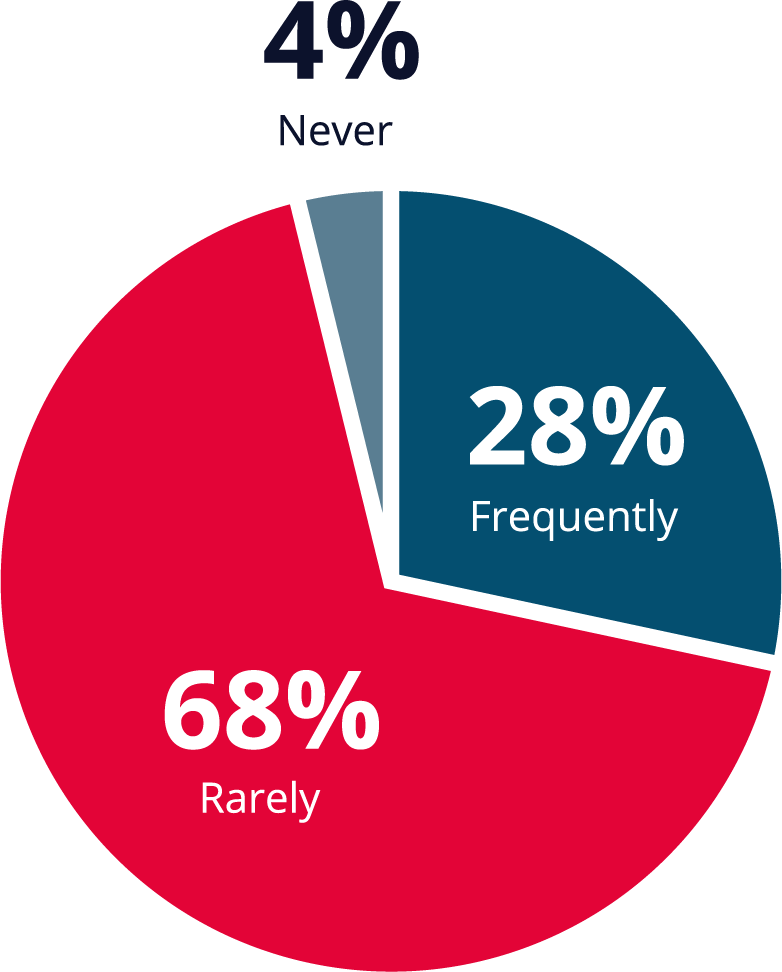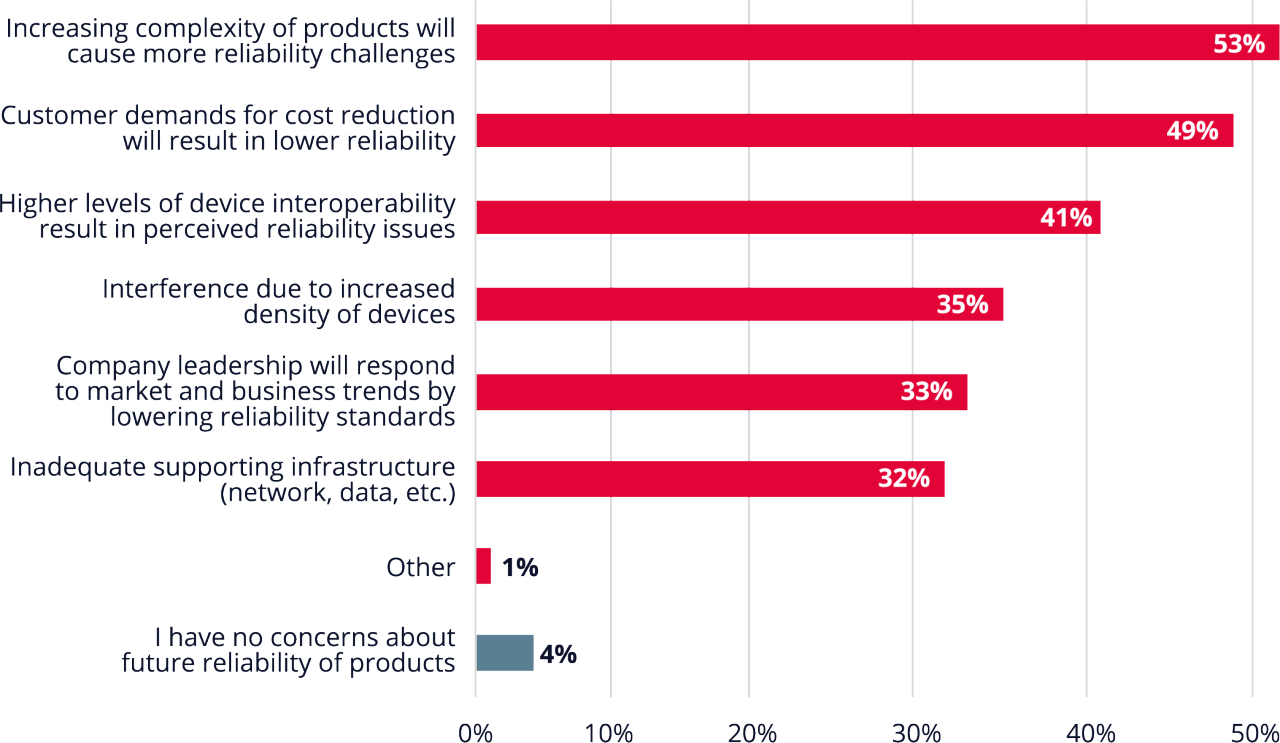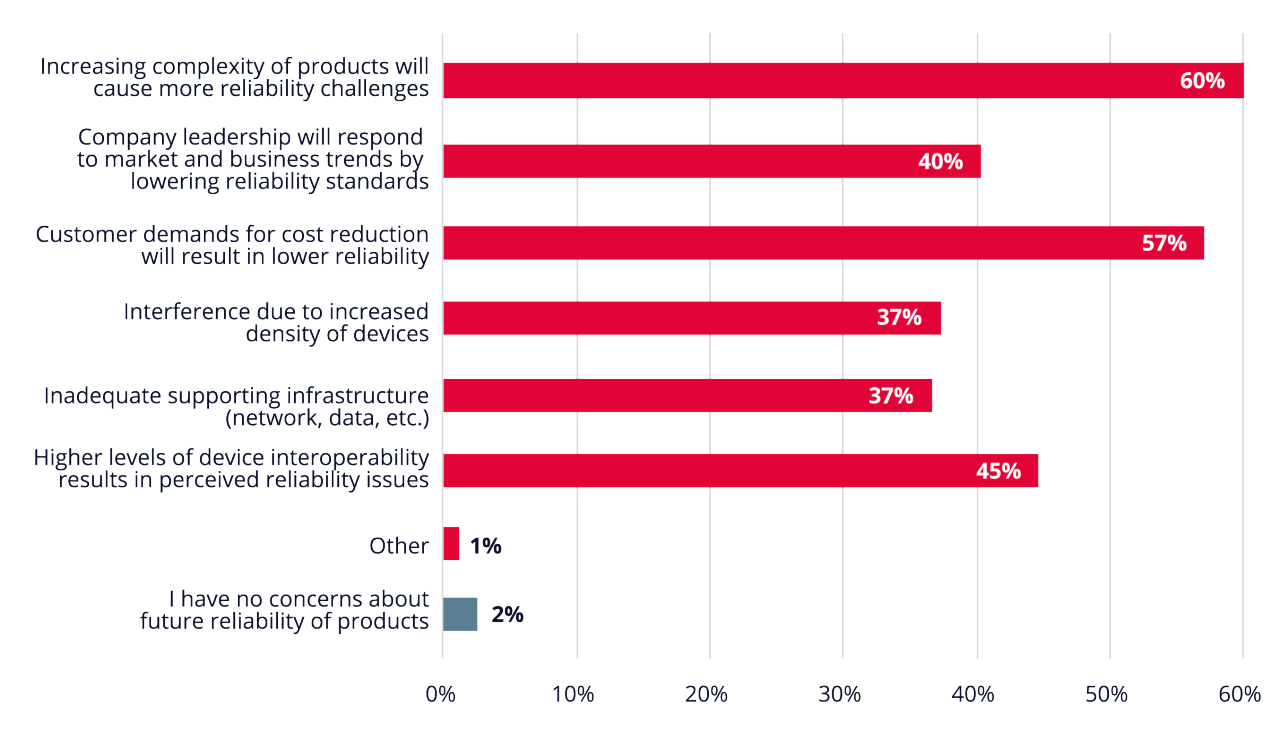

What is reliability? The answer to this seemingly simple question can be the differentiator between a successful product launch and a failed brand reputation. Boiled down to its simplest form, reliability is a measure of consistency to expectation over the lifecycle of a product. In practice, however, the definition of reliability is much more fluid. Consistency, expectation and product lifecycle vary widely across industries and applications — and even within the same types of systems and devices. So, what does reliability really mean?
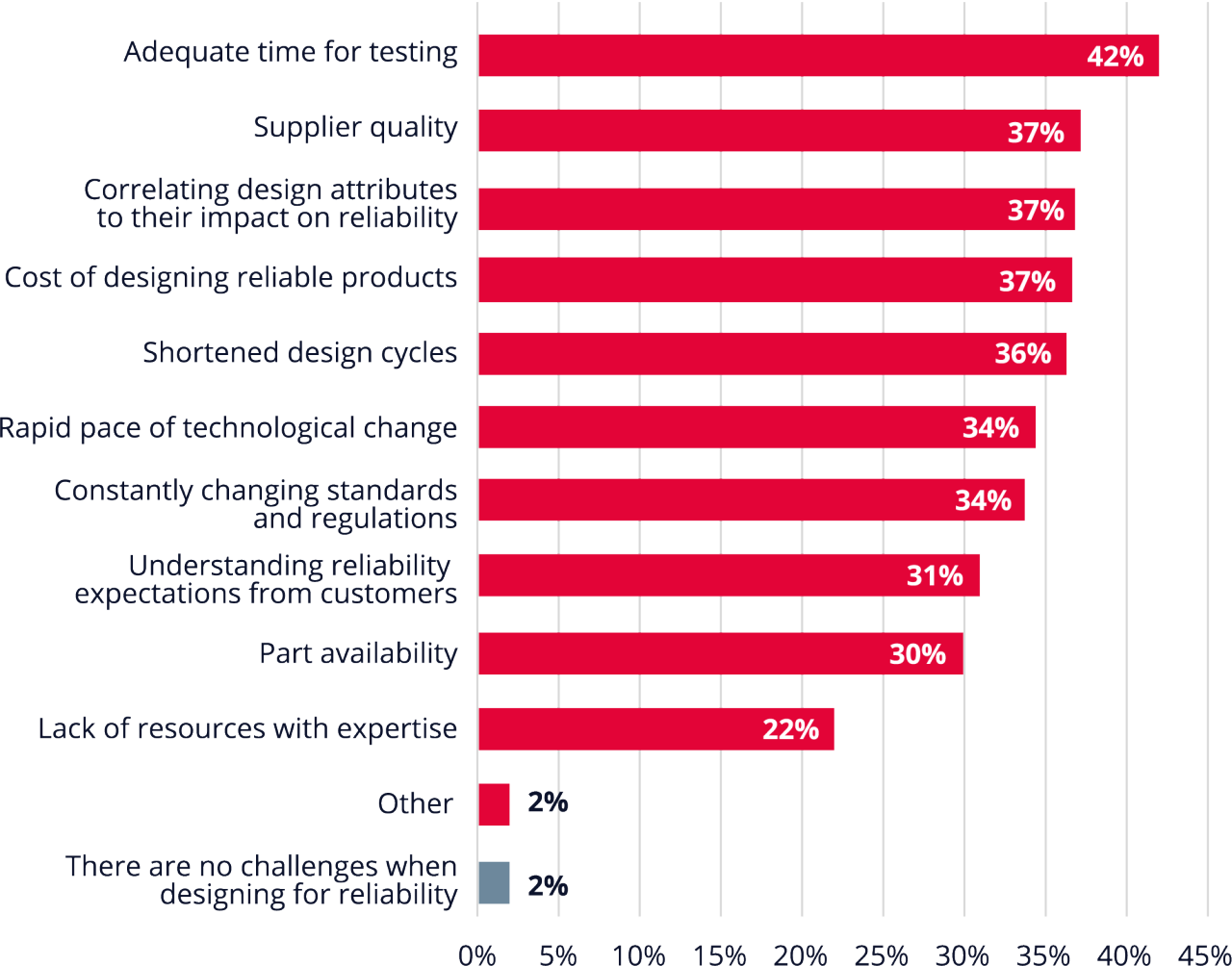
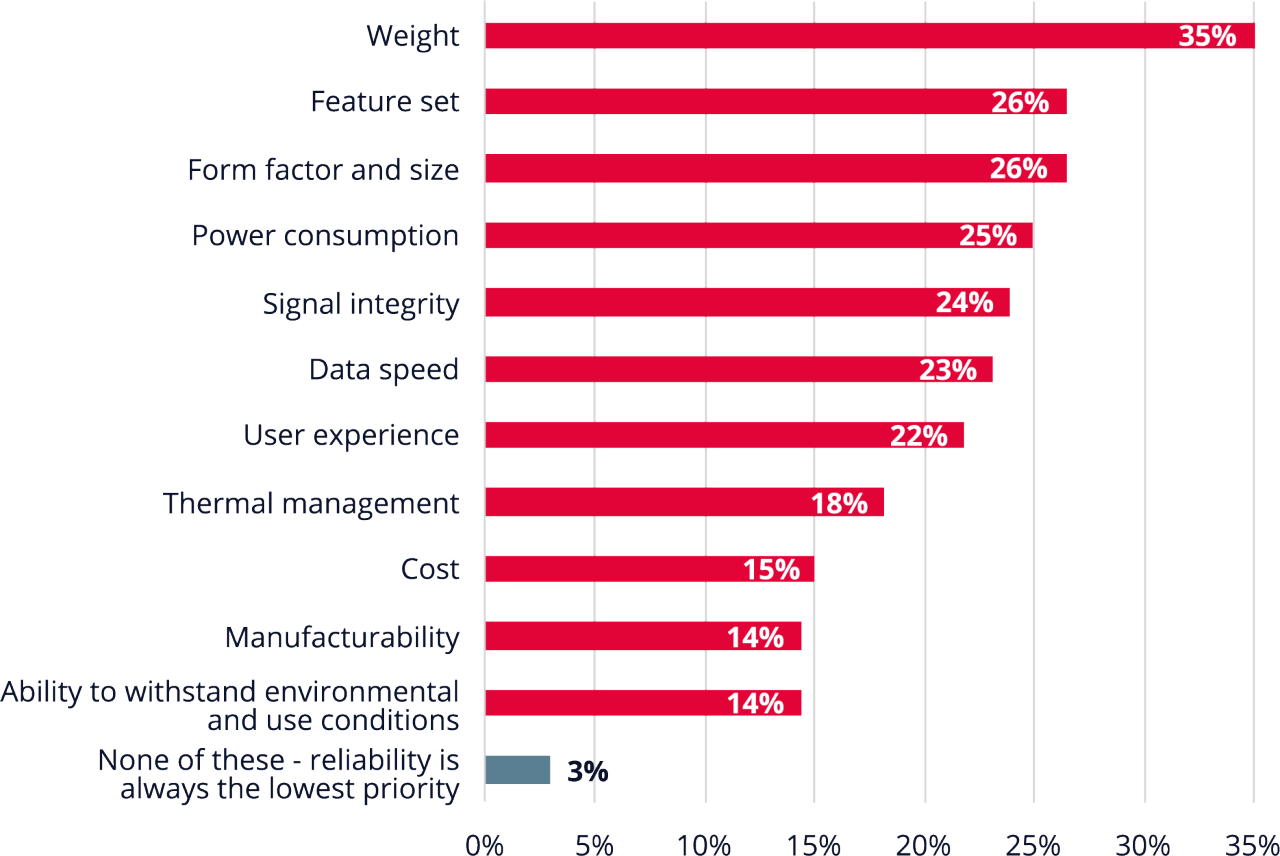
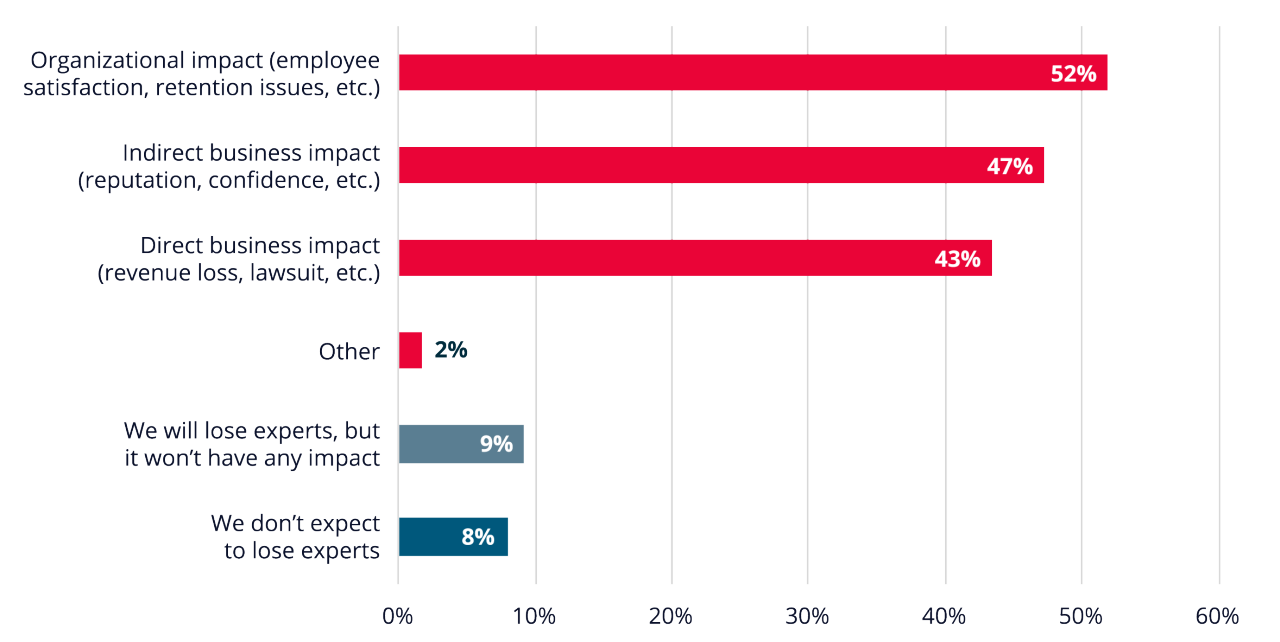
This report — compiled from data collected in the Molex Reliability and Hardware Design Survey of system architects, engineers and engineering managers working in several key industries — reveals a world of conflicting expectations, compromises, uncertainty and optimism when it comes to reliability. Today’s engineers are forced to balance growing expectations for reliability with diminishing time for testing. Cost and manufacturability are colliding with performance characteristics and time to market. And products are growing more complex while a knowledge gap is emerging as the workforce ages, leaving critical roles open to younger, less experienced resources.
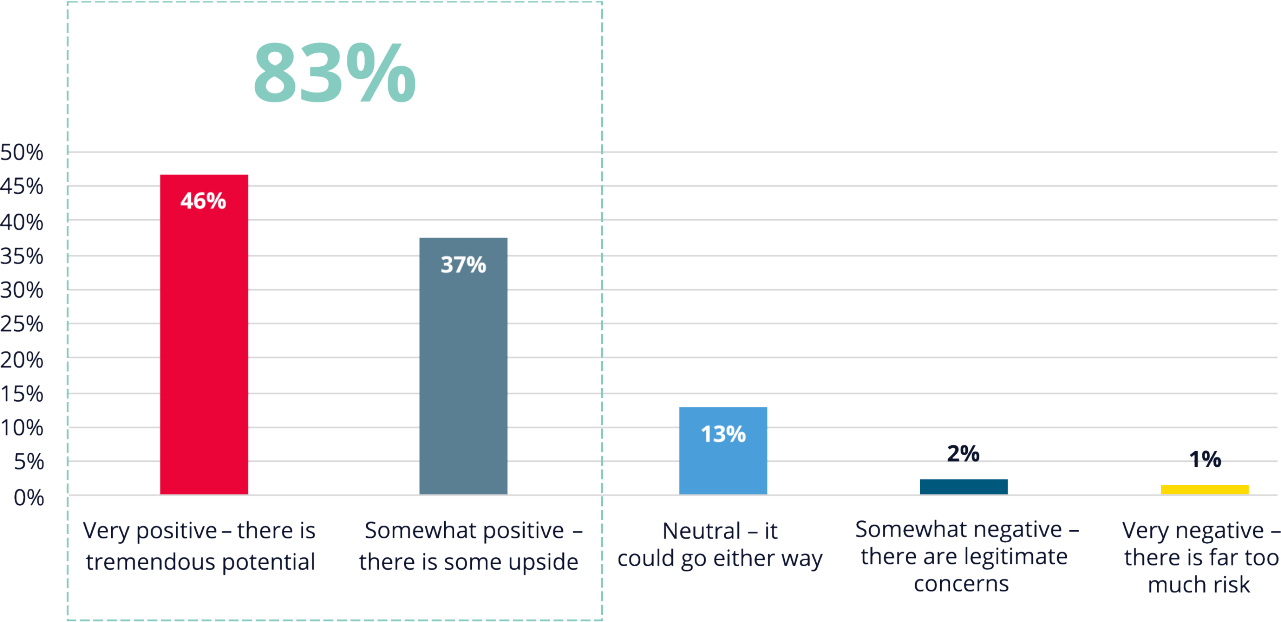
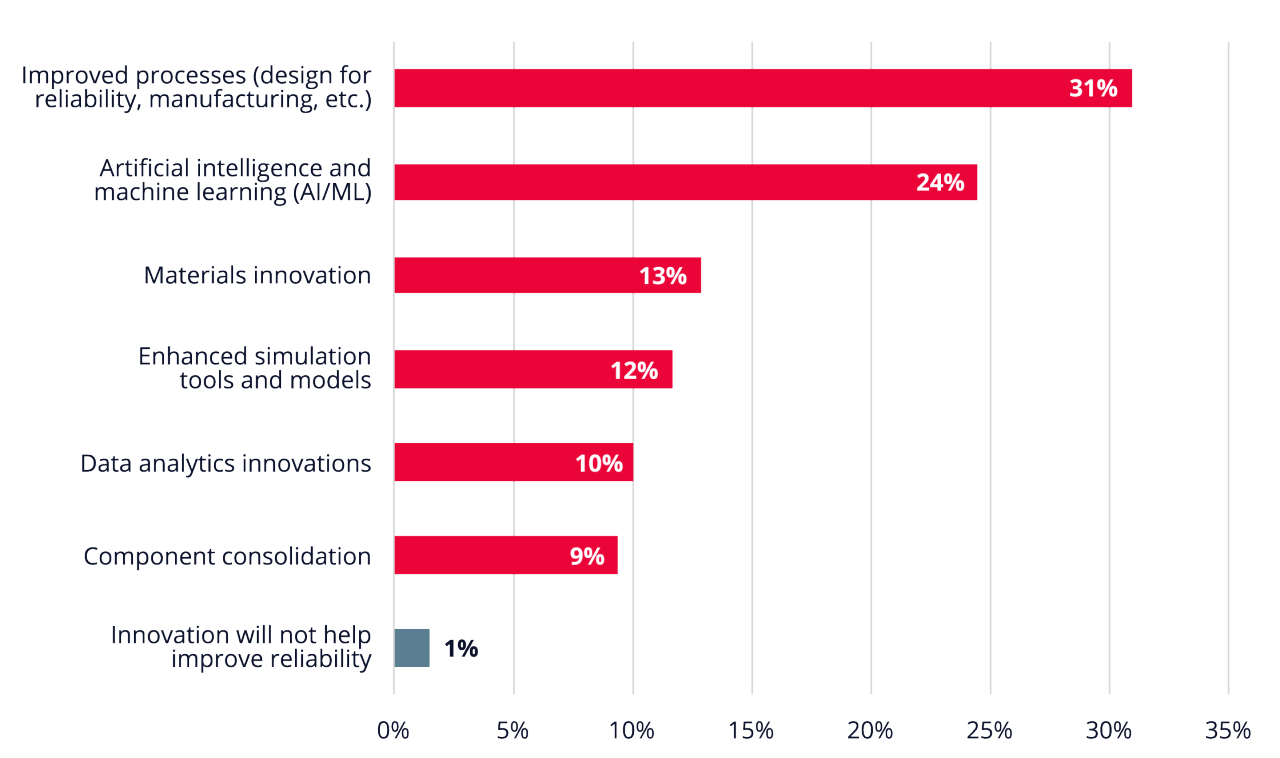
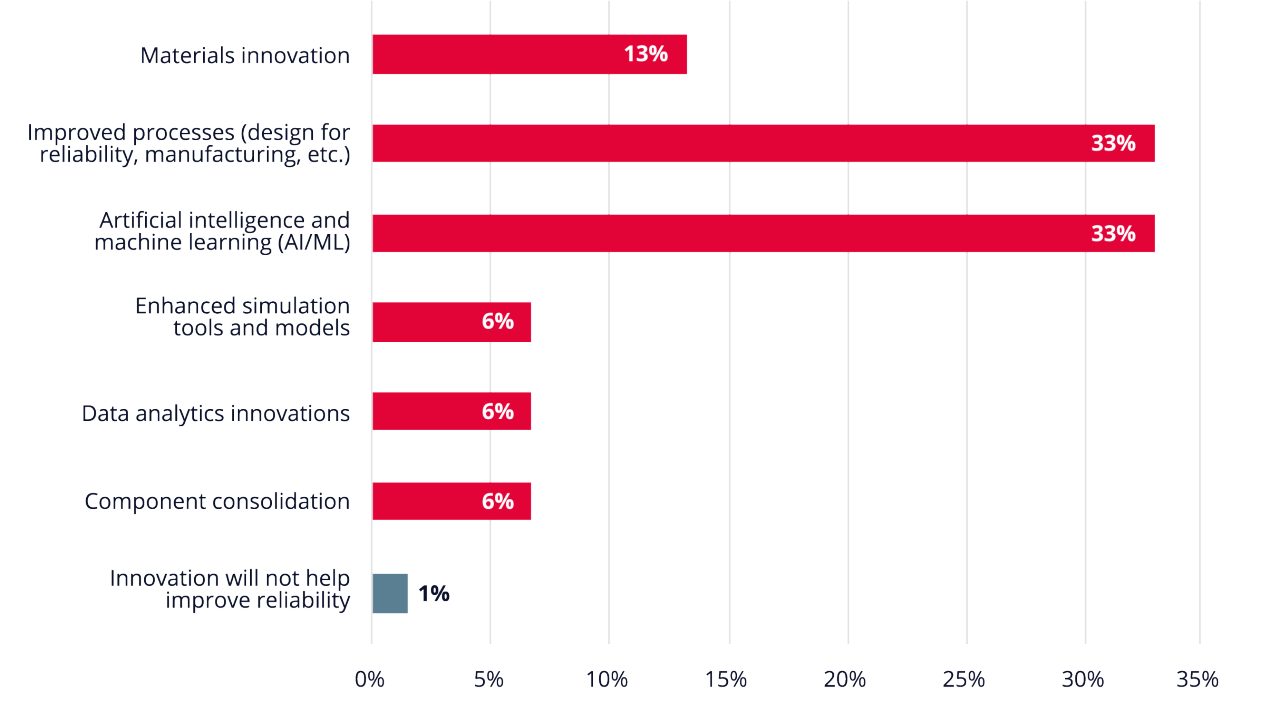
But the results also demonstrate excitement for the future. Digital technologies like artificial intelligence (AI), simulations and advanced analytics are expected to positively impact reliability. Can these technologies help offset the loss of highly experienced employees?
This report explores the current state of reliability, the challenges companies face in designing for reliability and the compelling innovations on the horizon.