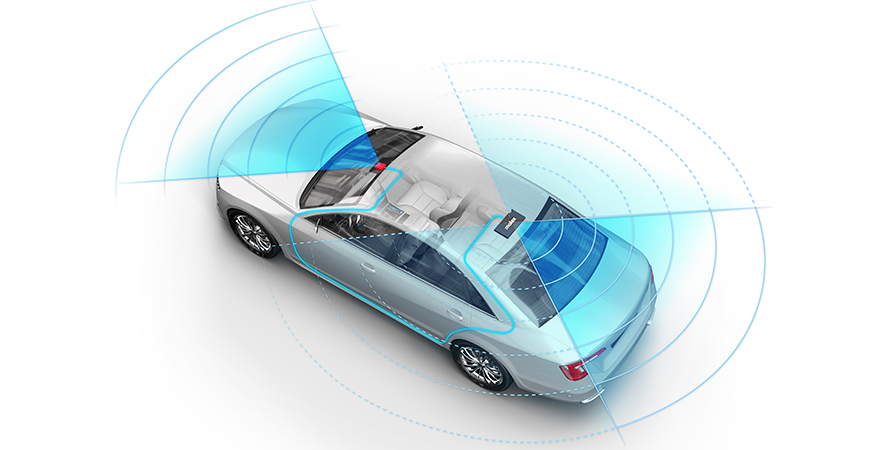

Automotive safety has come a long way from the invention of the seatbelt. New sensors and compute capabilities are ushering in advanced protections for everyone—drivers, passengers, pedestrians, and cyclists. Now the task for design engineers is to deploy these technologies quickly and efficiently so their benefits can spread as widely as possible.
Case in point, automobiles are sprouting an ever-growing array of vision sensors, including cameras, lidar and radar. These sensors are enabling vehicles to detect many potential dangers, such as another driver coming up alongside; sudden breaking of the vehicle ahead; or even a child walking behind a car that has shifted into reverse.
With these capabilities, drivers can receive warnings in various forms, whether it’s an illuminated signal on a side mirror, an audible tone or even haptic feedback, like having the driver’s seat vibrate. Sensors can also tie into braking systems, forcing a car into a rapid stop if a driver continues to move toward a collision event. And these same capabilities are critical to the advancement of automated driving.