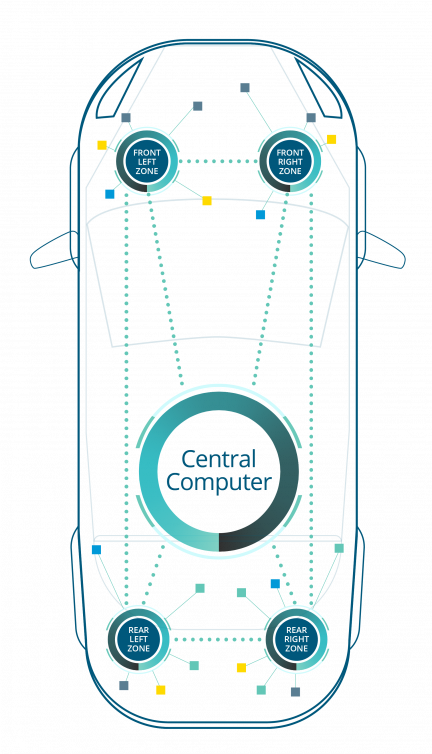

The automotive industry has a long history of embracing new technology. Each generation of cars and vehicles becomes more advanced as manufacturers introduce new features that improve safety, efficiency and passenger comfort. Despite this continuous improvement, overall automotive design has changed very little for decades, both in terms of how cars are made and in their architectures.
Though electronic content drives many cutting-edge features in new cars, the manufacturing techniques used to connect electronics have not advanced at the same rate as the hardware and software. This stalled advancement could prove problematic to future automotive development if not addressed. In fact, a recent Molex and Mouser-sponsored study indicated that more than 57% of the professionals surveyed identified technology issues with manufacturing as one of the greatest barriers that must be overcome to achieve next-generation vehicle architecture.
The reason for this lack of change is legacy. As manufacturers develop each new vehicle, they are building on the previous generation. And with so much of the latest innovation occurring in the electronic controls of vehicles, this dependence on legacy designs means each new feature that is added must be incorporated into existing structures.